
a piece on queer media
More than three hundred words are banned from the White House government website. The words “woman”, “equality”, and “discrimination” have vanished into a digital void and cease to be found on whitehouse.gov. But I’m not here to dwell on what’s been erased but rather illuminate what remains. I’m here to bring queer art to light and to show that magnificent things are still being forged by magnificent people and that the art of defiance still exists.
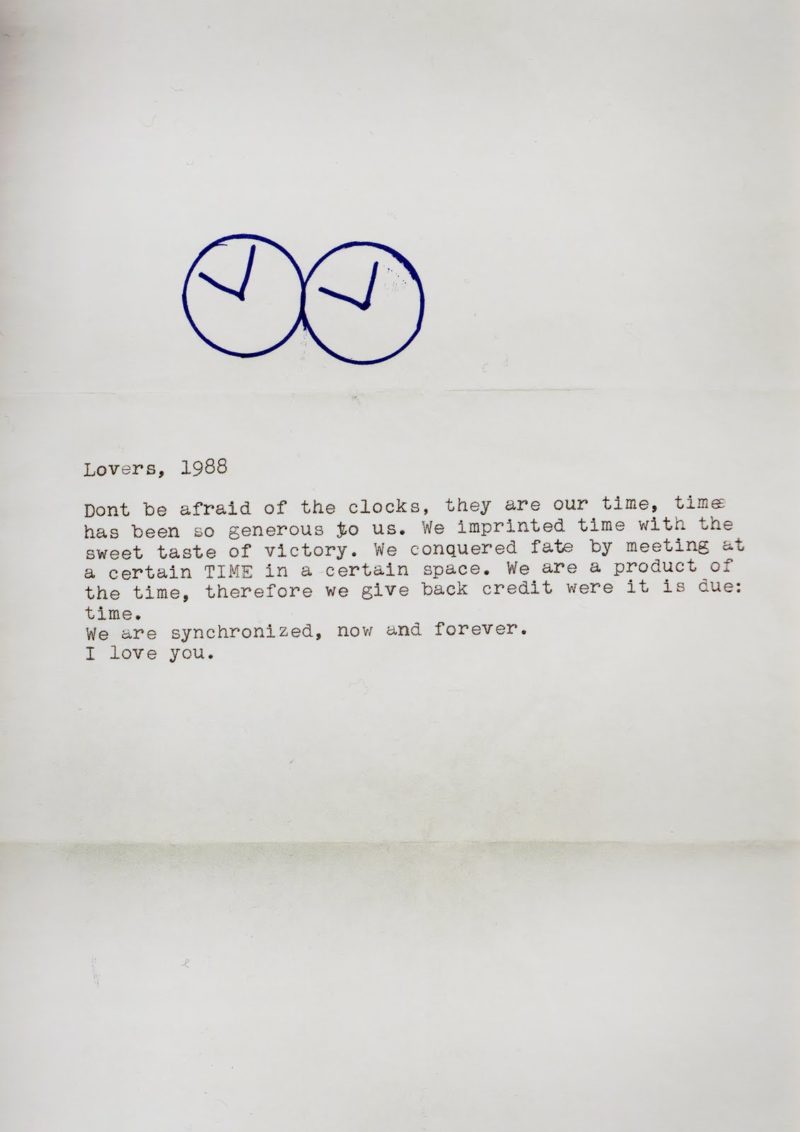
I used to be indifferent to visual art. As a literary artist myself, that feels shameful to say out loud but it’s true. I’ve wandered MoMA unimpressed and drifted through the MET slightly bored, never reading the synopsis that gave soul to these pieces. This changed in the last three weeks in a class called “Time-Based Digital Arts.” I’m taking it for my minor and expected it to be a very standard, by the book lecture–oh how glad I am that I was wrong. On the first day, we were met with an image of two clocks. We sat in silence, our eyes darting between the two faces as they stood side-by-side, their rims purposefully making contact. For presumably the first time ever, I noticed a stutter in the rhythm of these two seemingly identical clocks. One’s second hand was one second ahead of the other. This kind of articulation could only have been put in demand by the artist themself. This piece of art is called “Untitled (Perfect Lovers)” by Felix Gonzalez-Torres.
Gonzalez-Torres was an openly gay artist. These two clocks symbolize Gonzalez-Torres and his late HIV-positive partner, Ross Laycock. The clocks act as synchronized heartbeats and the one on the left is Ross Laycock, one second behind Gonzalez-Torres, illustrating their lives inevitably falling out of sync. “We conquered fate by meeting at a certain TIME in a certain space. We are a product of the time, therefore we give back credit where it is due: time. We are synchronized, now and forever. I love you.” (Gonzalez-Torres, 1988).
Laycock died from AIDS in 1991. Gonzalez-Torress followed just five years later. To date, the AIDS epidemic has claimed approximately 44 million lives worldwide. This grief consumes Gonzalez-Torres throughout time, noting other pieces that resemble his partner such as “Untitled (Portrait of Ross in L.A.)”, a jarring piece that is perceived as a simple pile of candy but weights 175 pounds, likely the weight of Ross Laycock. Gonzalez-Torres stands alongside artists like Keith Haring and Zoe Leonard who remain some of the most influential voices circling the AIDS epidemic.
“Perfect Lovers” is a perfectly harrowing metaphor for love and the fragility of life in its present and the inevitability of its end. I don’t bring this piece to your attention to invite fear or encourage you to reevaluate your life but to demonstrate the raw power of queer art in its most minimal yet excruciating form of conceptual simplicity. In a time where queer people are being actively and purposely scrubbed from all media, the act of remembering is considered radical yet alarmingly necessary. If we continue to talk about work produced by people in this community, their names don’t just become something we talk about historically but will live on our tongues longer and enter more conversations surrounding political art.

Felix Gonzalez-Torres – Untitled (Perfect Lovers), 1991, photo: MoMA


Leave a comment